

Planning a conference in Maryland requires more than logistics and scheduling. Effective public event security is crucial to protect attendees, speakers, and sensitive information. From large conventions to intimate seminars, security measures ensure that all participants can focus on the event without fear of disruption or safety concerns. Implementing a structured approach to conference security minimizes risks and helps organizers respond swiftly to unexpected incidents.
Assessing Risks and Vulnerabilities
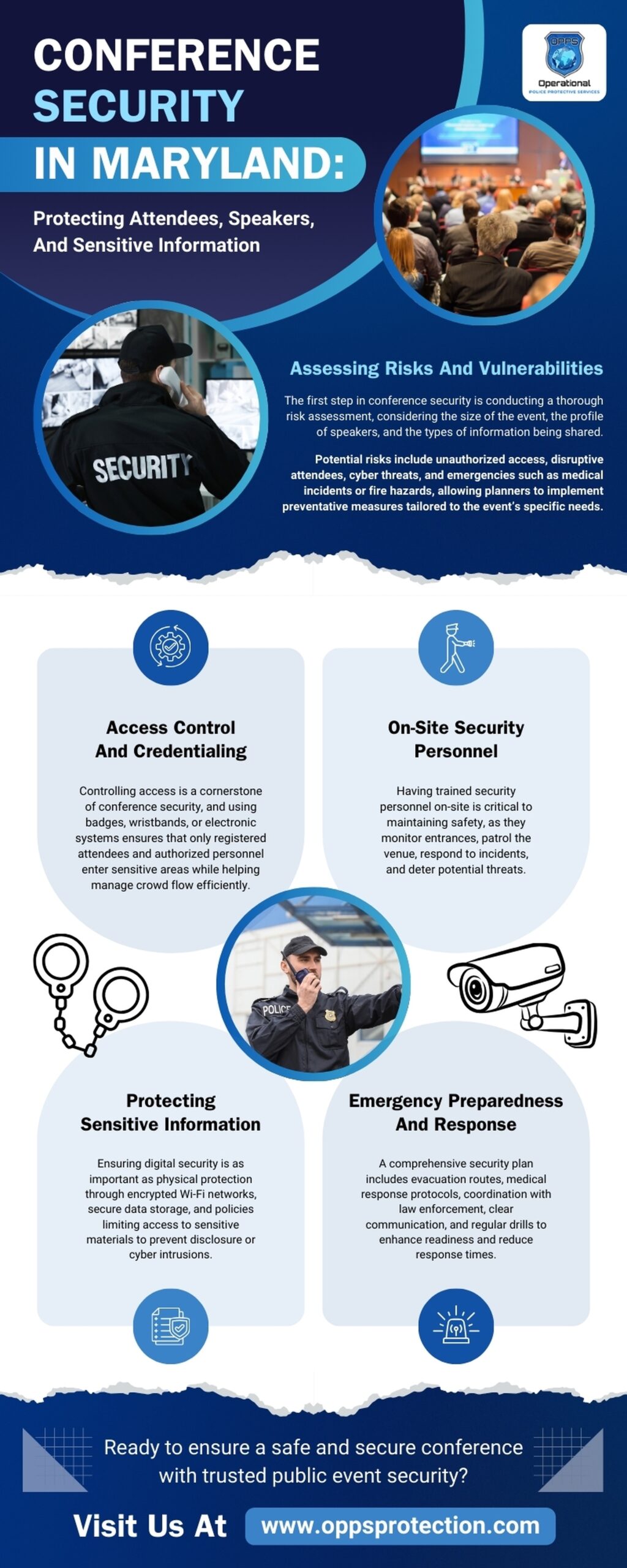
The first step in conference security is conducting a thorough risk assessment. Event organizers must consider the size of the event, the profile of speakers, and the types of information being shared. Potential risks include unauthorized access, disruptive attendees, cyber threats, and emergencies such as medical incidents or fire hazards. Identifying vulnerabilities in advance allows planners to allocate resources effectively and implement preventative measures tailored to the event’s specific needs.
Access Control and Credentialing
Controlling access is a cornerstone of conference security. Using badges, wristbands, or electronic access systems ensures that only registered attendees and authorized personnel enter sensitive areas. Credentialing also allows security teams to identify individuals quickly and manage crowd flow efficiently. For high-profile speakers or VIP attendees, separate check-in areas and escorted movement within the venue can further enhance protection.
On-Site Security Personnel
Having trained security personnel on-site is critical to maintaining safety. These professionals monitor entrances, patrol the venue, and respond to incidents as they arise. Their presence not only deters potential threats but also reassures attendees and staff. Security personnel should be trained in crowd management, emergency response, and communication protocols to handle various scenarios effectively.
Protecting Sensitive Information
Conferences often involve presentations, workshops, and networking sessions where confidential information may be shared. Ensuring digital security is as important as physical protection. Measures can include encrypted Wi-Fi networks, secure data storage, and policies limiting access to sensitive materials. Additionally, instructing staff and participants on proper handling of confidential content helps prevent accidental disclosure or cyber intrusions.
Emergency Preparedness and Response
Even with strong preventive measures, emergencies can occur. A comprehensive security plan should include evacuation routes, medical response protocols, and coordination with local law enforcement and emergency services. Clear communication channels, signage, and trained personnel ensure that attendees know how to react in case of fire, medical emergencies, or security threats. Regular drills and scenario planning can enhance readiness and reduce response times during real incidents.
Conclusion
Conference security in Maryland requires a multi-layered approach that addresses physical safety, digital protection, and emergency preparedness. By combining risk assessment, access control, professional security personnel, and protective measures for sensitive information, event organizers can create a secure environment where attendees and speakers feel confident and focused. Investing in effective security is not only a safeguard but also a key component of successful event management.
Secure Your Maryland Conference Today with Operational Police Protective Services
Operational Police Protective Services provides expert conference security, event protection, and public event security services in Maryland. Protect your attendees, speakers, and sensitive information while ensuring a safe, seamless experience. Contact OPPS today to secure your event.









Leave A Comment
You must be logged in to post a comment.